Seminary taught you Greek. Nobody taught you this.
Use the tool to get to draft one. Learn to build your own workflows for everything else. Research, writing, communication, all of it.
Cohort 1 starts April 20 · 5 weeks · 20 pastors max
Use the tool. Or learn to build.
Start with the product. Go deeper with the course. Most people end up doing both.
Get to draft one, faster
Power Pastor runs your sermon prep workflow right now. Paste your scripture text, get back exegetical research, a manuscript draft in your voice, and a newsletter. Done.
- Biblical research with verified citations
- Sermon draft matched to your voice
- Weekly newsletter, standalone value
- Works today, no setup required
Build your own workflows
A 5-week live cohort (April 20 - May 22) where you learn to build AI tools for your specific ministry. Sermon prep is just the start. Pastoral care, newsletters, curriculum, admin, all of it.
- Live sessions, twice a week
- Build on your actual preaching schedule
- No coding required, ever
- 20 pastors max, hands-on help
Here's what one pastor built in six months.
I'm not a developer. I'm a parish priest in Hell's Kitchen. I built every one of these workflows myself, and you can too.
Biblical Research Pipeline
Comprehensive exegetical research with verified citations. Greek analysis, theological voices from Barth to Bonhoeffer, contemporary context. All cross-referenced.
4 minutes, not 4 hoursVoice Matching
AI that writes like you, not like a robot. Trained on your actual sermons so every draft sounds like it came from your mouth, not a machine.
Your voice, amplifiedNewsletter Generator
Weekly parish newsletter that people actually read. Standalone value, growth-optimized, written in your voice. Not a sermon recap. Real content.
10 minutes per weekTheological Essays
Long-form theological writing that engages real scholarship. Not surface-level ChatGPT summaries, but genuine intellectual engagement with the tradition.
Seminary-grade, your perspectiveYou don't need to learn to code. You need to learn to think alongside AI.
AI is a conversation, not a button
You already know how to have a good conversation. You do it every Sunday, every hospital visit, every vestry meeting. That's the core skill. We just point it in a new direction.
Your sermon prep is already a workflow
Research, reflection, writing, editing. You've been doing this for years. AI slots into what you already do. It doesn't replace your process. It makes it faster and deeper.
Build once, use every week
My research pipeline runs every Monday morning. The newsletter system runs every Thursday. These aren't one-off tricks. They're infrastructure for your ministry.
You own your tools
No subscription to someone else's app that might disappear or change its pricing. You build it, you understand it, you control it. That's the whole point.
Start with what's due Sunday
We don't learn theory and hope it applies later. We start with your actual scripture text for this week and build from there. You leave every session with something you can use.
The hard skill is the one you already have
Theological thinking. Pastoral intuition. Knowing your congregation. AI can't do any of that. But it can handle the mechanical work that keeps you from doing it well.
What this week actually looks like
The before and after, from my own ministry.
Monday used to mean four hours in commentaries and browser tabs before I had a direction. Now I have verified exegetical research with citations in four minutes, and I spend that time actually thinking about what it means for my people.
The first AI draft I got sounded like a seminary paper written by committee. So I trained it on my actual sermons. Now it sounds like me on a good writing day, and I edit from strength instead of starting from scratch.
I used to write the newsletter at 11pm Thursday because it was always the thing that got pushed. Now it takes ten minutes and people actually read it. Open rates went up because the content is worth opening.
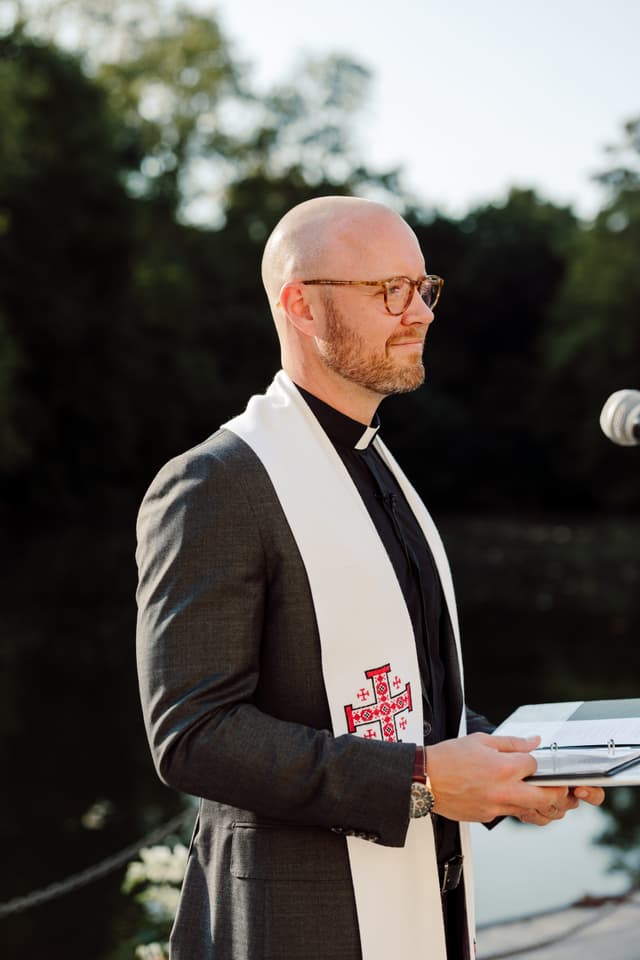
Stephen Setzer
Episcopal priest. St. Clement's Church, Hell's Kitchen, NYC.
I'm not a tech guy who discovered church. I'm a pastor who got tired of spending Monday through Saturday on work that AI could help me do better. Seminary prepared me for a lot of things. The weekly content treadmill wasn't one of them.
I started building AI workflows for my own sermon prep because I was drowning in the cycle. Research, writing, newsletters, pastoral letters, adult ed curriculum. The work never stops, and nobody teaches you how to manage it with modern tools.
Six months later, I have a research pipeline that generates verified exegetical analysis in minutes, a voice model trained on my actual preaching, and a newsletter system that's growing my congregation's engagement. I built all of it. And I'm not a developer.
April 20 - May 22, 2026
5 weeks. Twice-weekly live sessions. Real workflows built on your actual preaching schedule. Limited to 20 pastors so everyone gets hands-on help.
20 spots · Starts April 20 · No commitment to apply
Questions you're probably asking
Do I need to know how to code?
No. I don't know how to code. That's the whole point. You describe what you want in plain English. The AI writes the code. You learn to direct it, not to program.
Is this just ChatGPT for sermons?
No. ChatGPT is a chatbot. This is about building workflows: repeatable systems that handle the mechanical parts of your week so you can focus on the pastoral and theological work that actually requires you.
Will this work for my denomination?
If you preach, write, and communicate with a congregation, yes. The workflows are denominationally agnostic. I'm Episcopal, but the skills transfer to any tradition that values thoughtful preaching.
What if I'm not tech-savvy?
If you can send an email and type a paragraph, you can do this. We start from zero. The live format means you get help when you're stuck, in real time.
How is this different from AI sermon tools?
Those tools give you a sermon. This teaches you to build your own tools. The difference is ownership, voice, and understanding. You're not dependent on someone else's product. You build infrastructure you control.
What do I actually need?
A laptop and a willingness to try something new. We'll walk you through setting everything up in the first session. You don't need to buy anything or prepare anything in advance.